
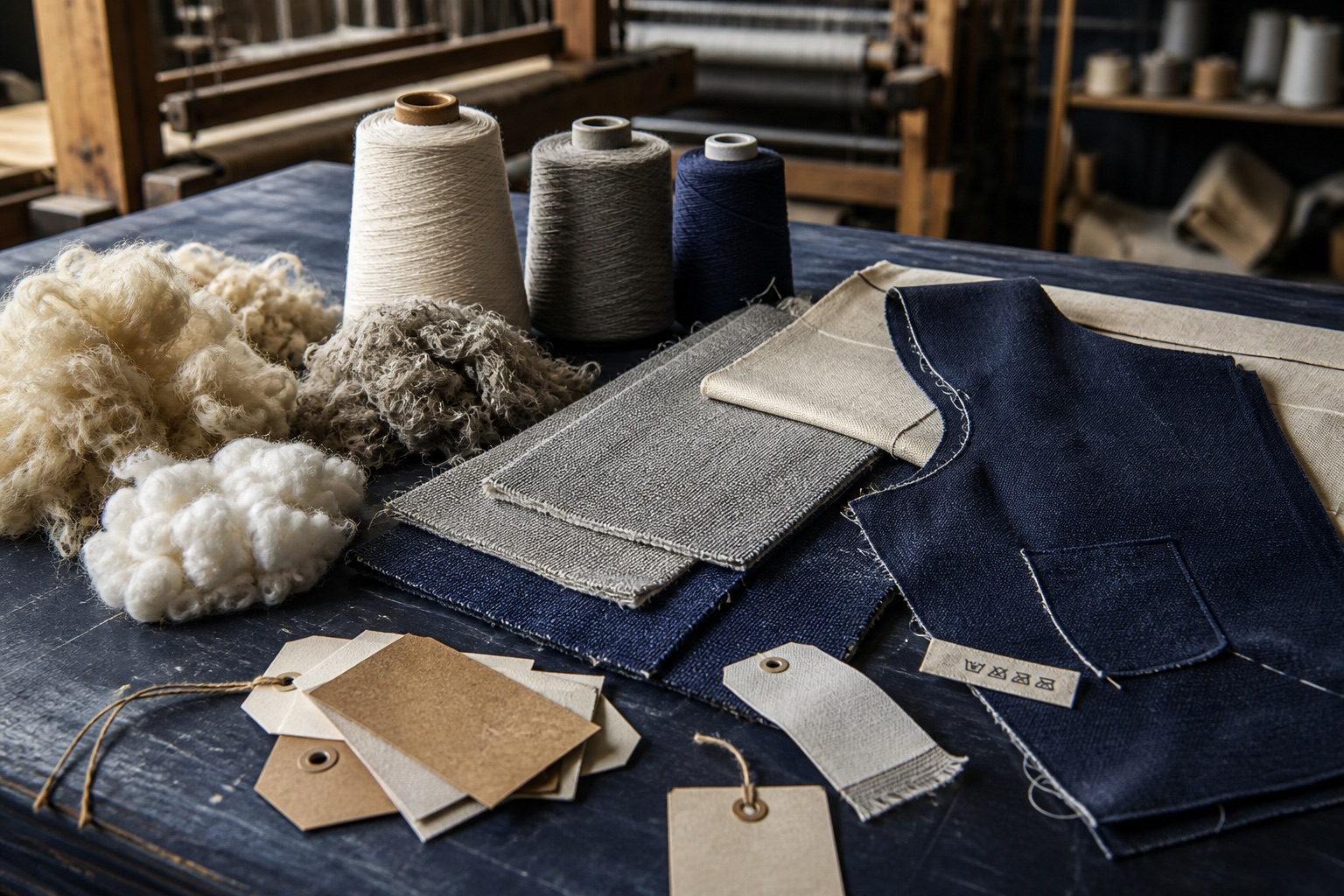
Supply chain model
See how Apparel & Textiles moves.
Trace changing fibers, facilities, orders, certifications, and product claims without rebuilding the evidence for every program.
01. Products
Styles, SKUs, colorways, collections, and finished garments
02. Materials
Cotton, synthetics, cellulosics, elastane, trims, dyes, and packaging
03. Facilities
Farms, ginners, spinners, dye houses, mills, laundries, and cut-and-sew sites
04. Transactions
Purchase orders, material lots, production batches, shipments, certificates, and claims
Evidence workflow in practice
Turn certified fiber into a defensible product claim.
Follow scope and transaction evidence from certified textile facilities to the brand approval behind a finished garment claim.
- Apparel brandOwns the product claim
- Textile suppliersProvide certified goods and records
- GOTS-approved certifierIssues certificate evidence
- Retail teamUses the approved product record
01 InitiateOpen the exact case02 ResolveConnect identity and evidence03 CoordinateCheck, route, and prepare04 DecideKeep human authority05 ActIssue and reuse the outcome
Garment order
Open the claim workflow against the exact garment order and material lots.
- Input
- Style, order, material and supplier references
- Control
- The brand owns claim approval; the GOTS-approved certifier owns certificate issuance.
- Handoff
- GOTS certificates · Textile suppliers
- Garment orderApparel brand
The garment claim is connected to current scope and transaction evidence for the relevant facilities and order.
Workflow boundary
CommonShare connects and checks the evidence; it does not issue GOTS certificates or replace the brand’s claim approval.
GOTS — who needs to be certified
Evidence in context
Keep proof close to the decision.
Bring every source record into one reviewable workflow.
A product-level view linking the garment to its material path, production sites, current evidence, and approved audience views.
- Fiber → fabric → garment
- 8 evidence records
- 2 review items
- DPP view controlled
Connected capabilities
Move from intake to action.
Configure contributors, evidence, approvals, and audience views.
01. Multi-tier mapping
Connect products, suppliers, facilities, materials, and transactions across tiers.
02. Supplier collaboration
Request structured data and evidence through collaborative supplier workflows.
03. Evidence governance
Extract, version, approve, and preserve documents with a reviewable audit trail.
04. Risk screening
Connect watchlist, sourcing, geography, and documentation signals to the right records.
05. Cases and corrective action
Route exceptions through cases, corrective actions, approvals, and escalation paths.
06. Digital product passports
Publish governed product records through QR experiences and role-based views.
07. Impact calculations
Maintain carbon, PEF, and CBAM calculations in traceable reporting ledgers.
08. Regulation-specific outputs
Prepare controlled statements, evidence rooms, certificates, assessments, and submission data.
Relevant pathways
Match the product to the rule.
Product scope, company role, material, transaction, market, threshold, and effective date determine the applicable pathway.
ESPR
Textile/apparel measures are scheduled for an indicative 2027 delegated act, not a 2027 compliance date.
REACH & SCIP
Substance and article duties depend on composition, thresholds, role, and market.
CSDDD
Company scope and chain-of-activities duties require entity-specific review.
EU Forced Labour
The product prohibition applies from 14 December 2027.
UFLPA
Applies to US imports exposed to the statutory presumption.
PPWR
Packaging duties phase in by format, material, and operator role.
PEF
A voluntary methodology unless incorporated into another requirement or claim program.
“By joining forces with CommonShare to introduce the Digital Product Passport, we’re not just enhancing transparency for our customers. We’re revolutionizing our approach to sustainability across the entire supply chain.”
Frequently asked
What teams need to know.
No. Textile apparel is a priority in the ESPR working plan, but the delegated act must define the covered products, required data, transition period, and final compliance date.
Explore the family
More in Consumer & Lifestyle.
Follow adjacent products into their distinct evidence chains.
Footwear & Accessories
Beauty & Personal Care
Toys & Children’s Products
Sporting & Leisure Goods
Consumer Goods & Housewares
Confirm your scope
Apply current legal text and implementing measures to your company role, products, materials, transactions, markets, and facts.